© Museu Comarcal de l'Urgell-Tàrrega
Omeka ID 1229
Pla de les Tenalles
Protohistory and Iberian world

kalathos

MCUT 3061

Object type
kalathos
Production date
-250 / -100
Fabric
common Iberian painted pottery
Museum
Museu Comarcal de l'Urgell-Tàrrega
Culture
Protohistory and Iberian world
Discovery location
Pla de les Tenalles
Materials
pottery
Township
Granyanella (Europa, Espanya, Catalunya, Lleida, La Segarra)
Technique
wheel-thrown
Where is it?
Exposició permanent
Dimensions
213 x 220 mm
Description
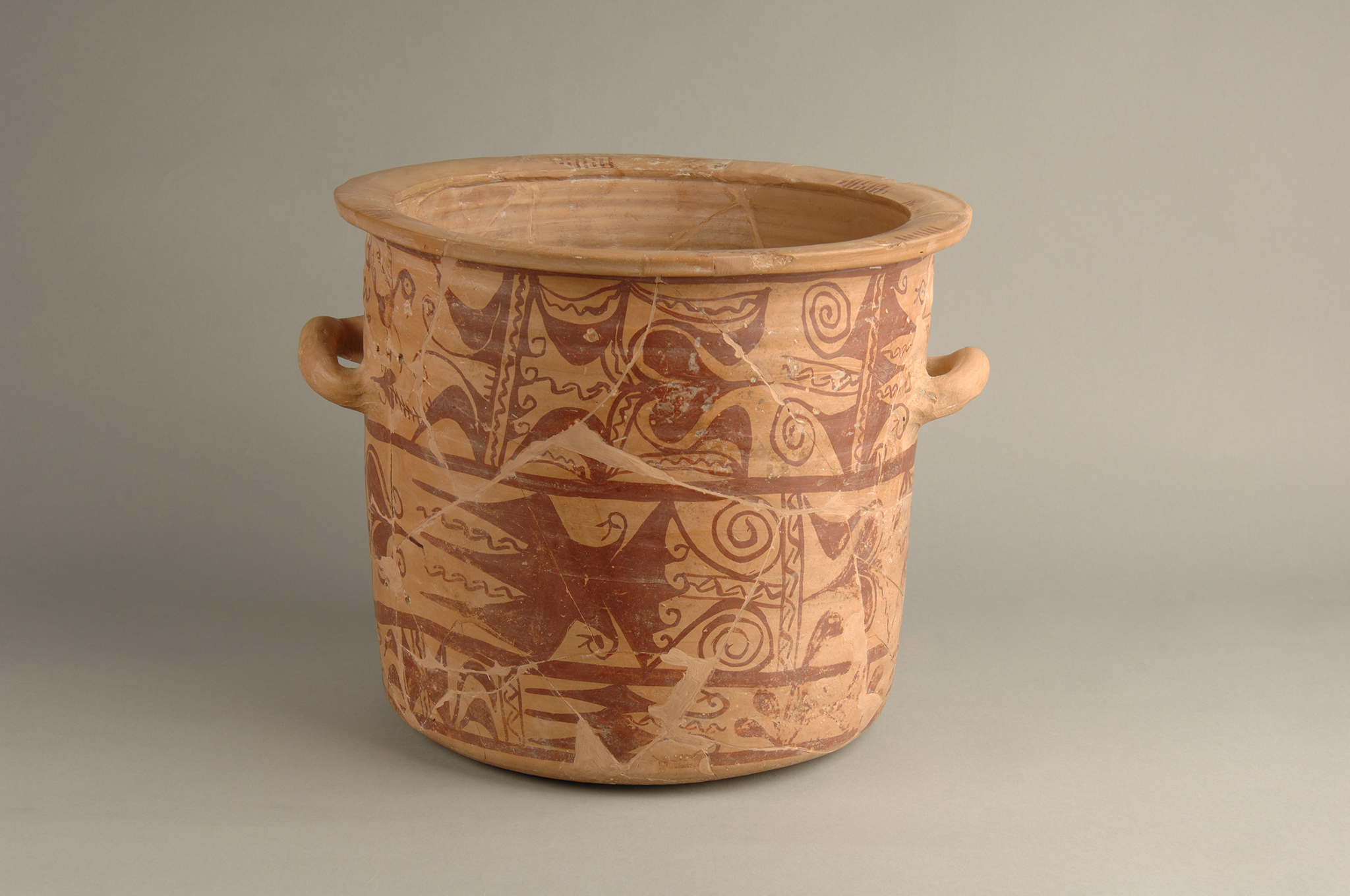
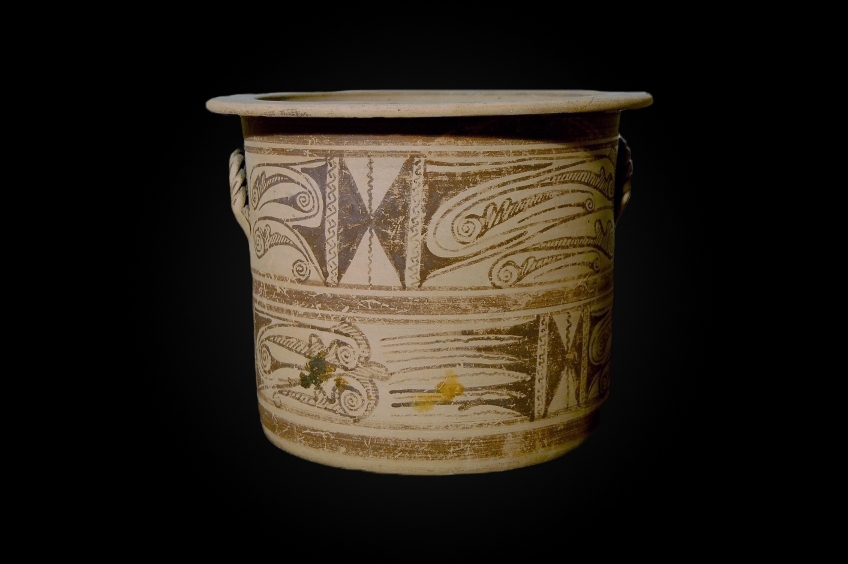
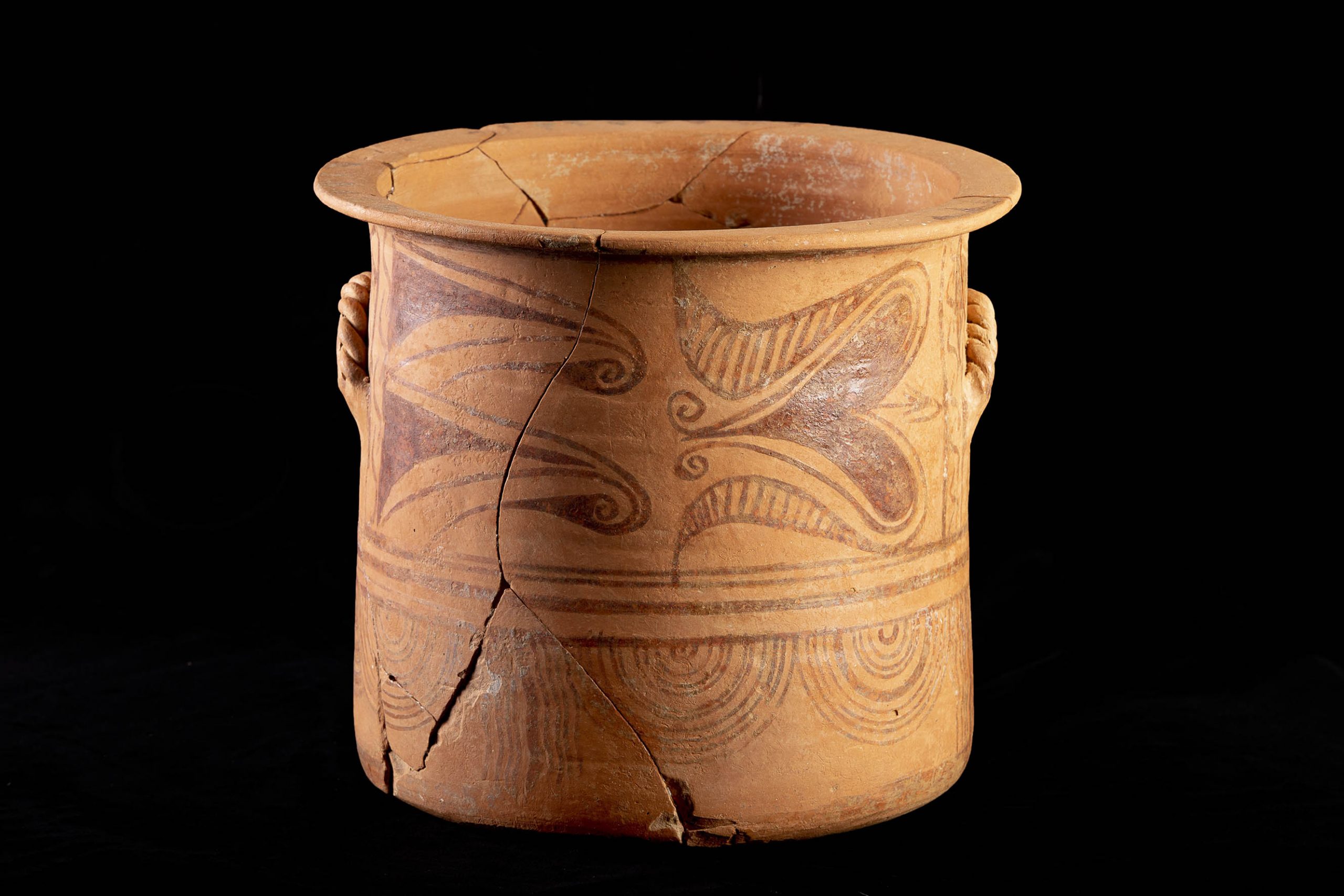
Kalathos with a concave base, cylindrical body and flat horizontal lip. Its decoration is painted in red, based on geometric patterns, stretching across the outer surface of the piece. Several horizontal bands, some thinner and some thicker, create panels or windows that are filled with the repetition of the same geometric motif. There is a narrow panel at the height of the middle of the body, which is part of a series of small concentric circles. Above and below, the remaining two wider windows display alignments of large concentric semicircles. Finally, the outer lip has a series of triangular motifs, called "wolf's teeth". The function of these kalathos vessels has led to many different interpretations but none are proven or definitive. The most accepted version is that they were a specific container for honey. In any case, their morphology, with a very wide mouth and a large interior space, seems appropriate and accessible for holding and serving all types of liquids or semi-solids. (honey but also oil, wine, water, sauces, condiments, etc.). Kalathoi are very characteristic in the Iberian ceramic repertoire that we know appeared at a very advanced time, from the second half of the third century BC, and lasted until its final moments, in the first century BC. This piece comes from the Iberian village of Pla de les Tenalles de la Mora, in particular from Level II of House 1 in a context that probably belongs to the time of destruction of the settlement, dated to around 200 BC.