© Museu de Badalona
Omeka ID 1933
Ciutat romana de Baetulo. L'Estrella
Roman world

sarcophagus

MB 18820

Object type
sarcophagus
Production date
200 / 400
Fabric
-
Museum
Museu de Badalona
Culture
Roman world
Discovery location
Ciutat romana de Baetulo. L'Estrella
Materials
stoneware
Township
Badalona (Europa, Espanya, Catalunya, Barcelona, Barcelonès)
Technique
sculpting
Where is it?
Exposició permanent
Dimensions
45 x 50 x 14 cm
Description
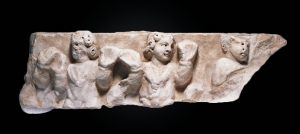
Fragment of a sarcophagus that, due to its strigilated decoration, seems to belong to the late imperial period (3rd-4th century AD). This motif of undulating striations or grooves is common in Roman funerary decoration. Some say that they symbolize the cleanliness and purity of the buried soul, due to their resemblance to the strigils of athletes or gladiators. The strigil was an elongated spoon-shaped instrument that forms an "S" with which athletes removed sweat and dirt from the skin. In the central part there were some clipei or medallions with the representation of the deceased or figurative scenes. In Villa de la Estrella, several reused architectural materials (spolia) were recovered, some dumped in late silos (5th-6th century AD). One of them is this sarcophagus fragment. The Via Augusta went by near the town and the necropolises were located along its route on the outskirts of the city.