© Museu de Badalona
Omeka ID 1920
Ciutat romana de Baetulo. Plaça de la Ciutat Romana. 2
Roman world

decorated bowl

MB 18814

Object type
bowl
Production date
65 / 70
Fabric
South Gaulish terra sigillata
Museum
Museu de Badalona
Culture
Roman world
Discovery location
Ciutat romana de Baetulo. Plaça de la Ciutat Romana. 2
Materials
pottery
Township
Badalona (Europa, Espanya, Catalunya, Barcelona, Barcelonès)
Technique
moulding
Where is it?
Exposició permanent
Dimensions
24 x 13 cm
Description
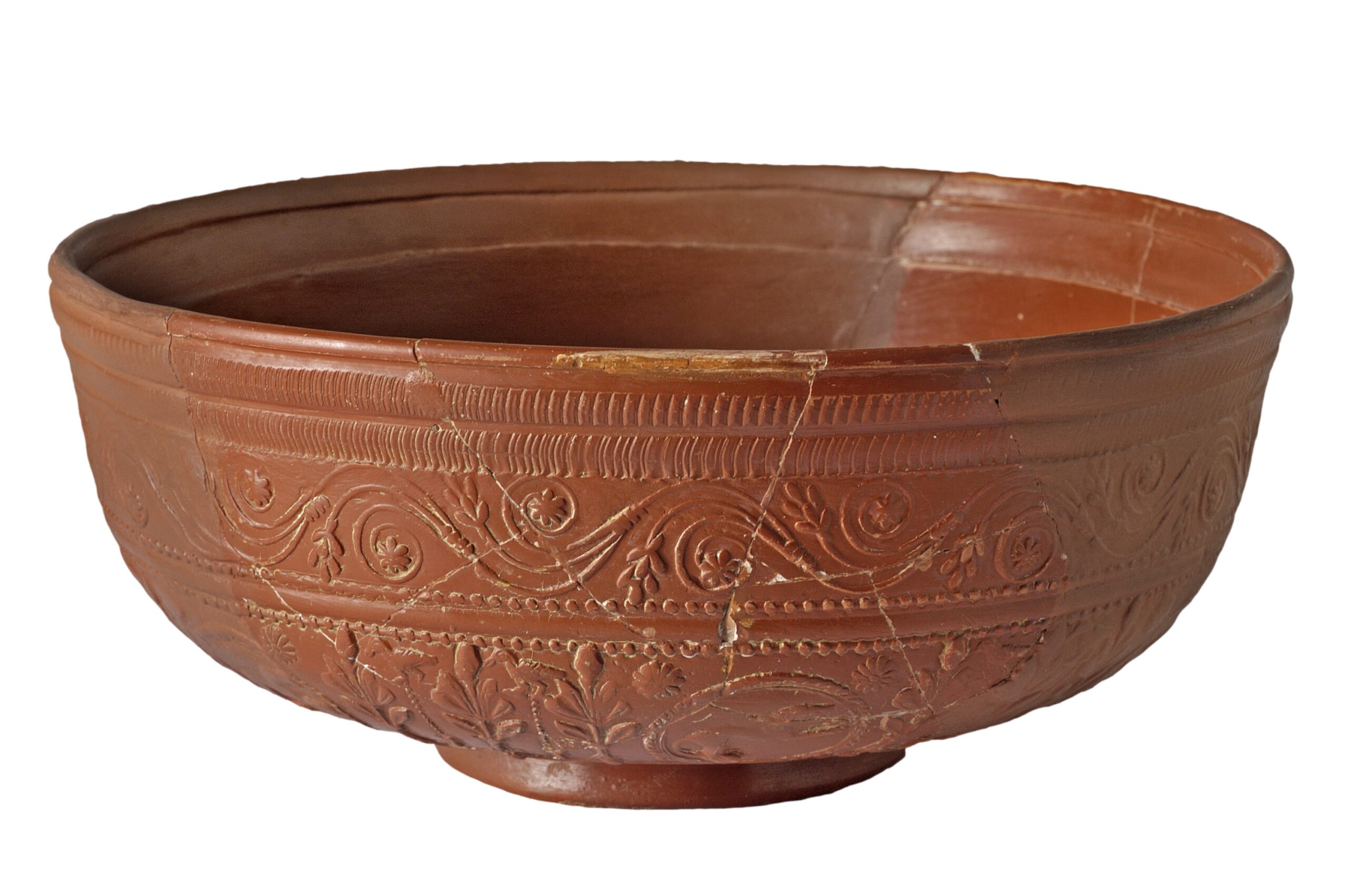
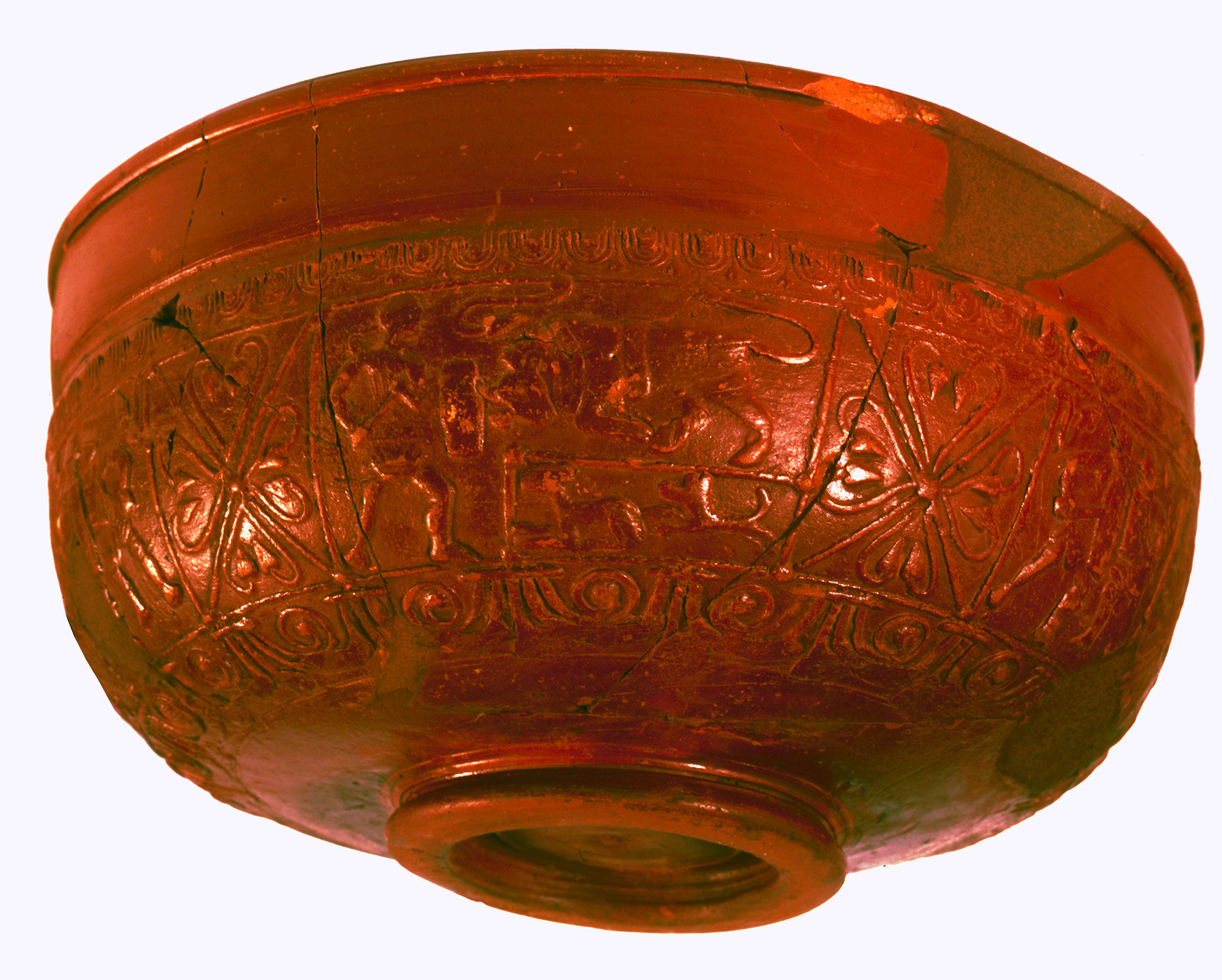
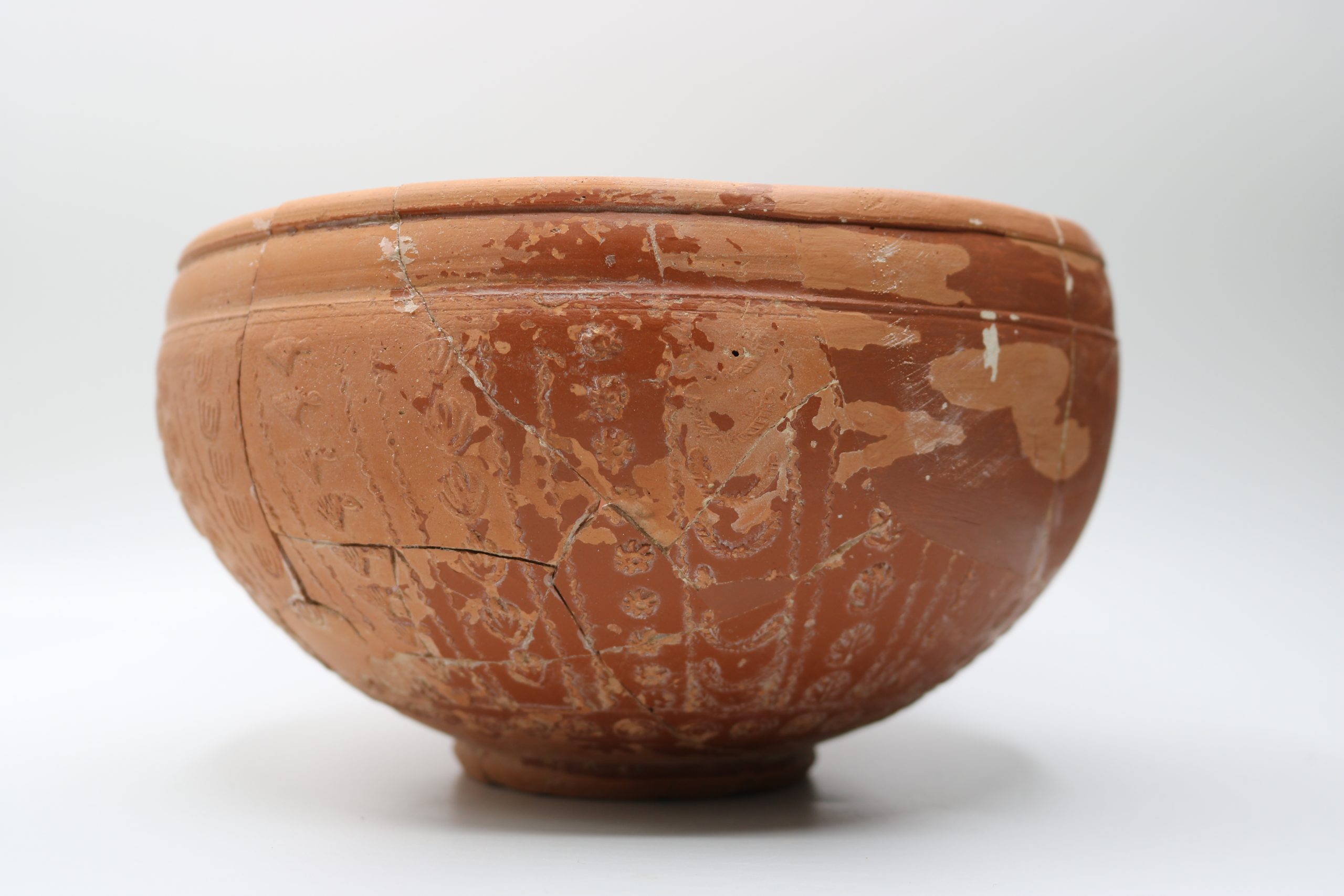
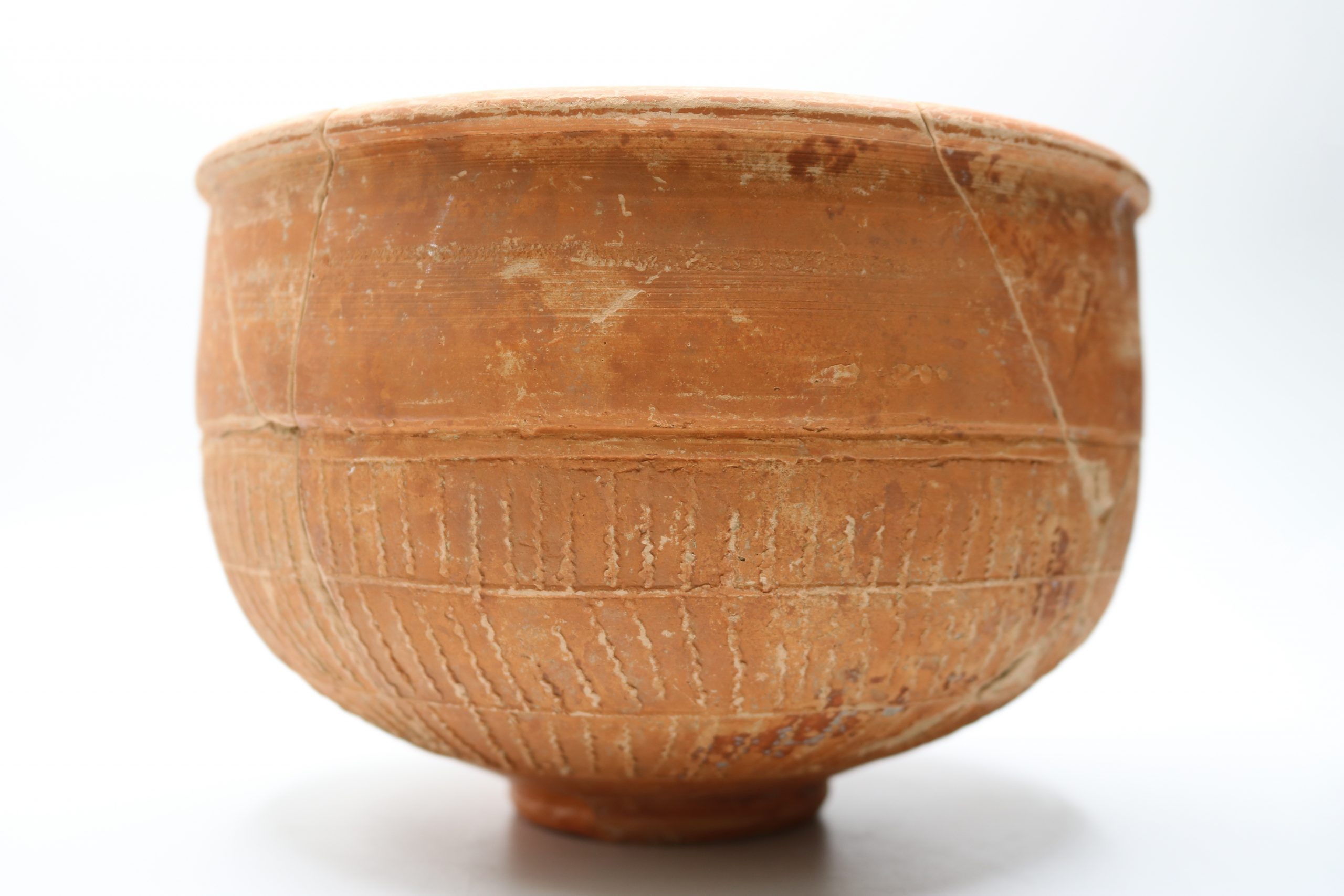
South Gaul terra sigillata bowl, of the Dragendorff 29 form. It is a very characteristic and abundant form in Baetulo. It is a large bowl with a wheel-shaped rim on the outside and two incised parallel lines on the inside; the wall and the outer carination are decorated with geometric plant shapes. On the inside of the piece there is a seal or potter's mark (officina) that we can transcribe as VANDERI (with AN link). According to Francesc Tarrats (2020), Vanderius worked in the ceramic production centre of La Graufesenque, in the Flavian period. He was active between AD 65 and 85 and only Dragendorff 29 and Dragendorff 18 vessels are known. In the Iberian Peninsula, until now, the only evidence of Vanderius's products was a cup from Villajoyosa, in Alicante, also in Dragendorff 29. On the other hand, it is very well documented in different French, Dutch, English, German sites... The shape of the vase, with its highly developed and flared rim, fits quite well with the Flavian chronology of the seal. In any case, the decoration, although very much from Nero's time, suggests that it is an example from Vanderius's first stage. It is a typical shape of South Gallic pottery and its carination evolves more and more markedly while the rim is more and more open. In Baetulo, South Gallic tableware is introduced in the reign of Tiberius, and the Dragendorff 29 is already present. In the Flavian period, shape 29 loses importance to Dragendorff 37, a much more hemispherical large bowl, but also with mould-decorated walls. This bowl was found whole, though broken, within a domus. As we have already seen, it is decorated and was common among the tableware of wealthy families. It was produced in La Graufesenque, a very large workshop (officina) that exported its ceramic production throughout the Empire, from the time of Augustus to the end of the 1st century AD.