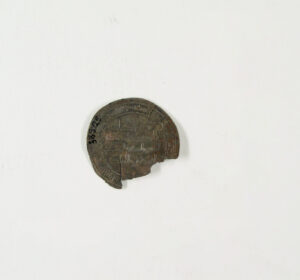
© Museu d'Arqueologia de Catalunya - Barcelona
Omeka ID 2230
Olèrdola
Medieval

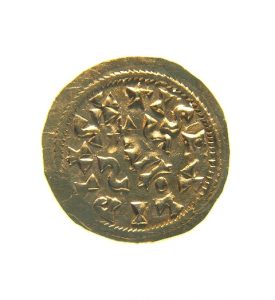
Hixem II dinar

MAC OLE-00278

Object type
coin
Production date
994
Fabric
-
Museum
Museu d'Arqueologia de Catalunya - Barcelona
Culture
Medieval
Discovery location
Olèrdola
Materials
gold
Township
Olèrdola (Europa, Espanya, Catalunya, Barcelona, Alt Penedès)
Technique
minting
Where is it?
Reserves
Dimensions
24 mm
Mint
Còrdoba
Description
Coin in the Islamic currency series (al-Andalus), with inscriptions in Arabic script on both sides. Obverse (IA): central legend (phrase of the Quran) and named mint (al Andalus) and year (384). Reverse (IIA): central legend with the name of the emir and border. The dinar was acquired by the Archaeological Museum of Barcelona from its owner, of which we do not know the name. Pere Girò, an expert on Penedes archeology and promoter of the public purchase of Olèrdola by the Diputación de Barcelona in 1963, brokered the acquisition. it is an Andalusian coin, a dinar or mancuso (Arabic word meaning engraved), according to the Arabic or Christian name, minted by the Caliph of Cordoba Hisham II (Abu'l-Walid Hisham ibn el-Hakam) around the year 384 of the Hegira (994 in the Christian era). Hisham II (Cordoba, 995-1013) was the 3rd Caliph and grandson of the Abd-al-Rahman III. He had two reigns, the first between 976 and 1009; the second between 1010 and 1013. He reformed the Mosque of Cordoba, cultural centre of the time. His hayib or prime minister was the famous Almanzor, who conducted several raids in the north of the Iberian Peninsula. The best known was in 985, when he sacked the city of Barcelona.