© Museu d'Arqueologia de Catalunya - Girona
Omeka ID 3185
Empúries

bulla

MAC GIR-013283

Object type
bulla
Production date
1 / 200
Fabric
-
Museum
Museu d'Arqueologia de Catalunya - Girona
Culture
-
Discovery location
Empúries
Materials
bronze
Township
Escala, l' (Europa, Espanya, Catalunya, Girona, Alt Empordà)
Technique
moulding
Where is it?
MASPG
Dimensions
29,5 x 27 x 15 mm
Description
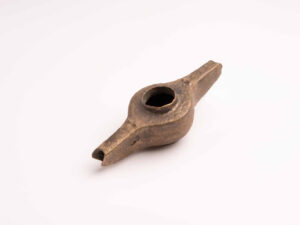
“Bulla” of the 1st-2nd centuries AD from Empúries (L'Escala, Alt Empordà). It is a bronze pendant made in a mould, consisting of two hemispherical concave parts fastened to each other. The “bullae” were pendant amulets carried by Roman children to keep bad spirits away and at the same time proclaim their status as children born as free citizens. Inside, they contained an amulet or talisman to protect the child. The manufacturing materials could be varied: leather, bronze, gold, wood or ivory, among others. Otherwise, the “bullae” could display different figured or geometric decorations, for example the “gorgoneion” showing the Gorgon's head or representations of Greek influence such as Dionysus and Heracles. During the Roman Empire, “bullae” were widespread among boys and girls. The Romans adopted the practice of wearing them like the Etruscans, as both cultures considered children as especially vulnerable beings and in need of protection. The children of Senators were the only ones who had the privilege of wearing golden “bullae”, while the rest of the children wore “bullae” made from materials such as bronze, bone or leather. The children left the “bullae”, when they reached the virile age and then offered it as an offering to the Lars or Hercules gods.