Image
3D Model
© Museu de la Noguera
Omeka ID 330
Castell Formós
Andalusian culture

plasterwork

MN-331

Object type
panel
Production date
1031 / 1036
Fabric
-
Museum
Museu de la Noguera
Culture
Andalusian culture
Discovery location
Castell Formós
Materials
plaster
Township
Balaguer (Europa, Espanya, Catalunya, Lleida, Noguera)
Technique
spatula
Where is it?
Exposició permanent
Dimensions
207 x 144 x 65 mm
Description
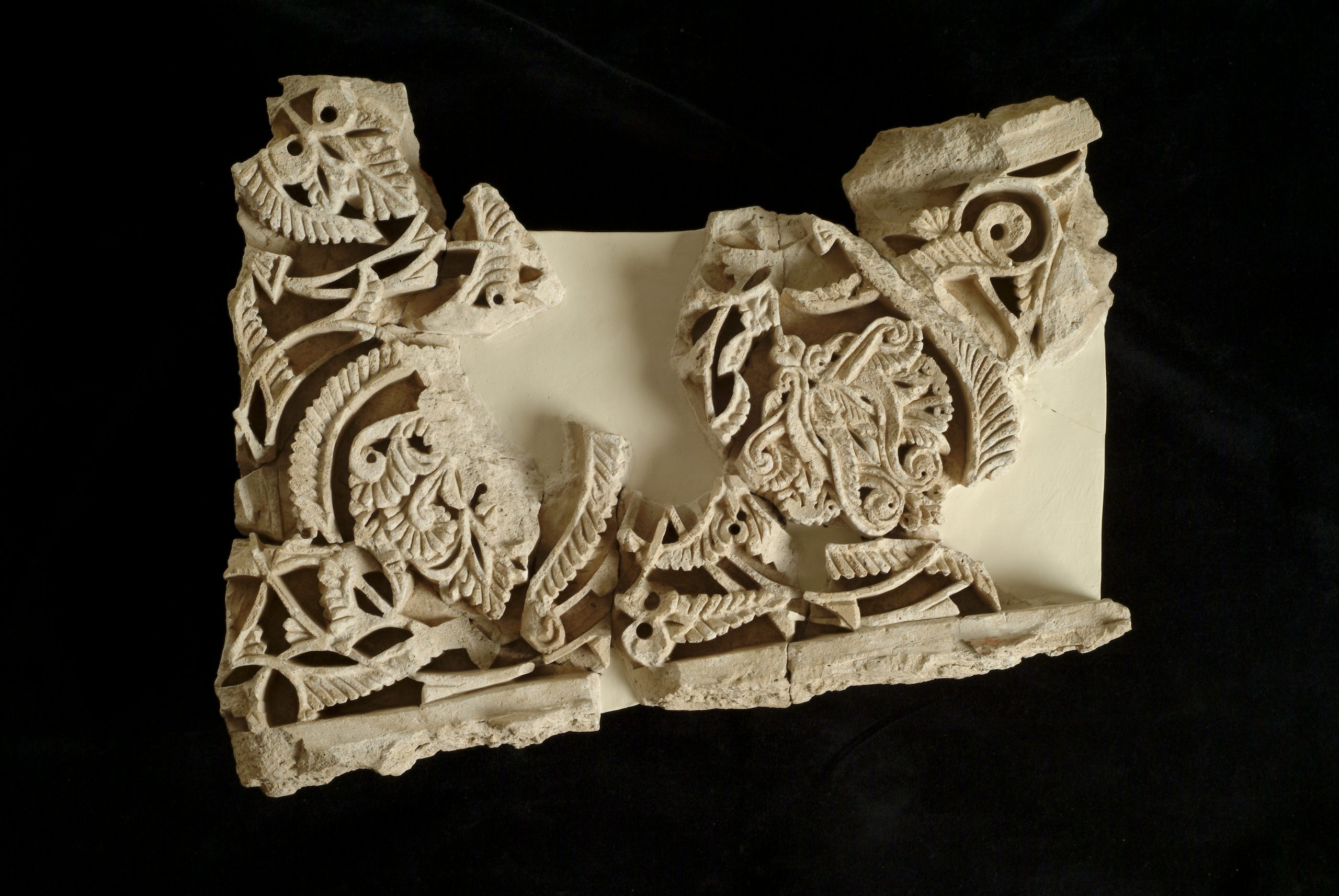
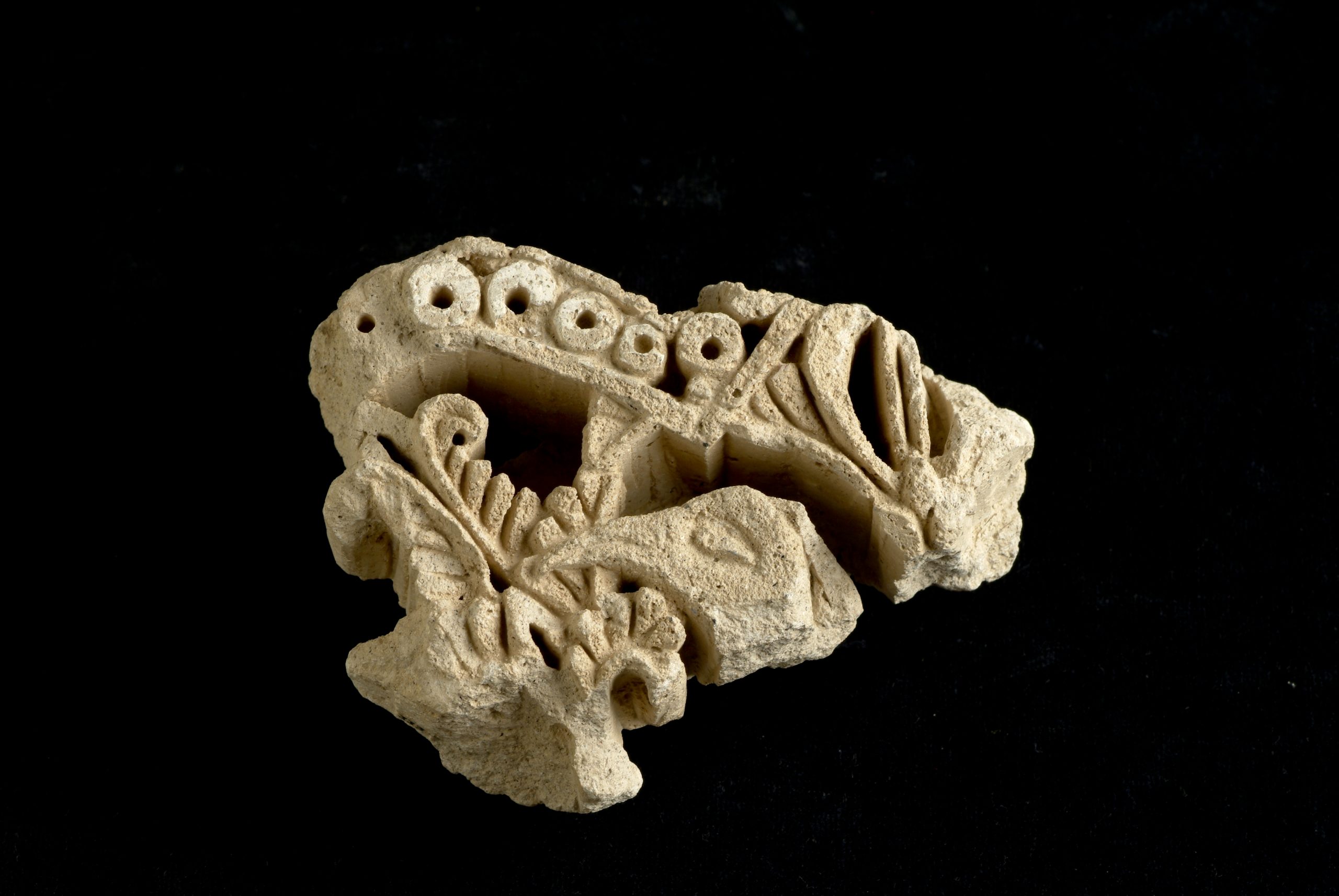
Plaster with anthropomorphic representation of a harpy with two hands. The harpy is shown in profile with the head nearly facing forwards. It is almost whole, except for the tail and the claws of the left leg. It has hair finishing on both sides with a highlighted semi-circular lobe and a pointed end of the hair. Of the body, only the wing presents a descriptive treatment in relief. The three rows of feathers are delimited by a band of seven beads between two lines. The main part of the tail is preserved between the end region of the wing and the left leg of the animal. It also has two legs. The harpy has two hands, with curled fingers, although the index finger seems to point to something that has not been preserved. Few remains of colour have been conserved colour: black on the outside edge of the face and hair, and red in the calves of the legs, start of the tail, chest and wing. Iconographically, it may be a case of a totally unknown representation in the Islamic art of the period and that it is a representation of the phoenix that symbolizes an exaltation of the figure of the promoter of the building, with a meaning of peace and prosperity, and the harpy was part of a tree of life where two harpies would face each other accompanied by two peacocks.