© Museu d'Arqueologia de Catalunya - Barcelona
Omeka ID 2643
Puig Castellar
Protohistory and Iberian world

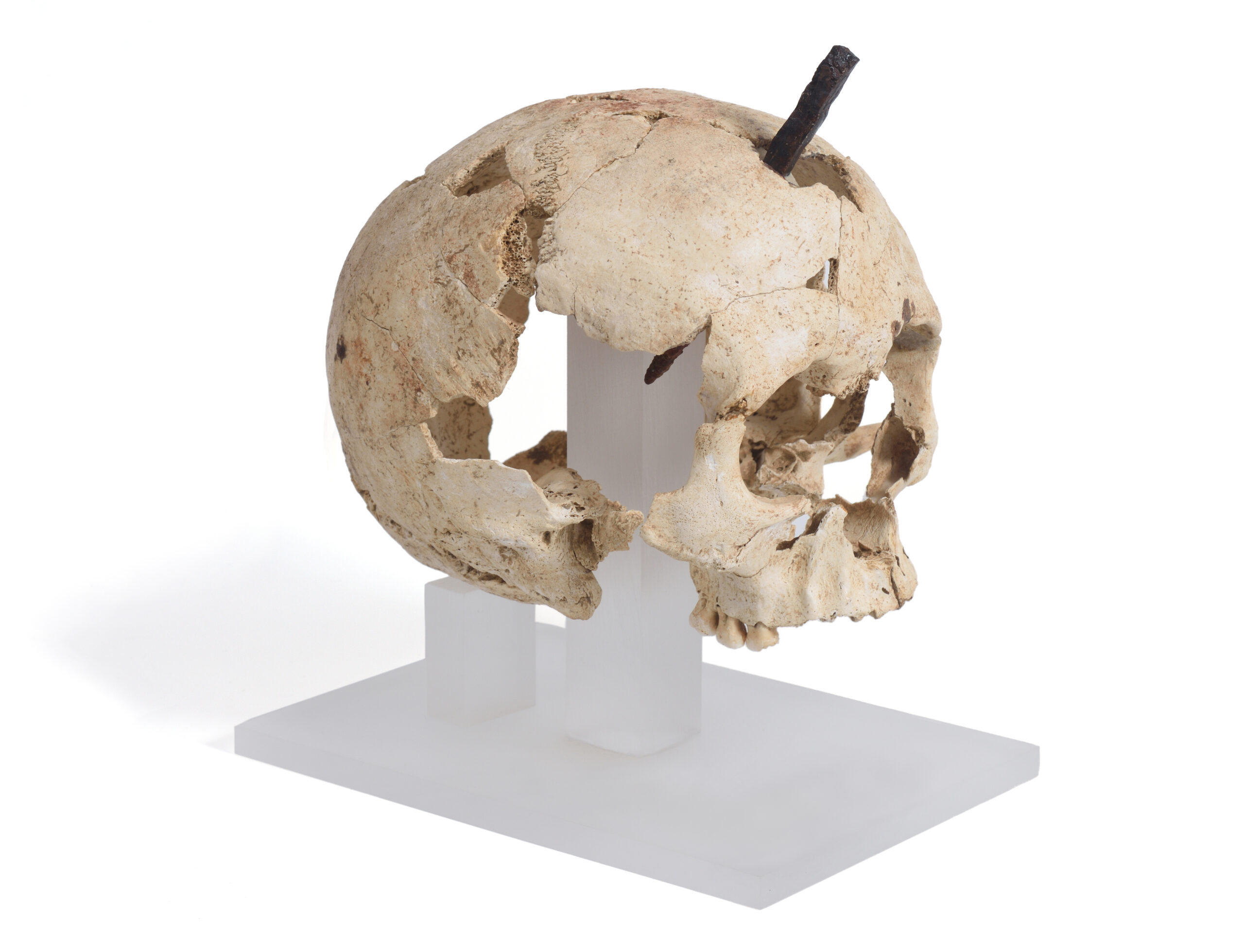
nailed skull

MAC BCN-039986

Object type
skull
Production date
-300 / -200
Fabric
-
Museum
Museu d'Arqueologia de Catalunya - Barcelona
Culture
Protohistory and Iberian world
Discovery location
Puig Castellar
Materials
bone, iron
Township
Santa Coloma de Gramenet (Europa, Espanya, Catalunya, Barcelona, Barcelonès)
Technique
openwork
Where is it?
Reserva provisonal
Dimensions
149 x 210 mm
Description
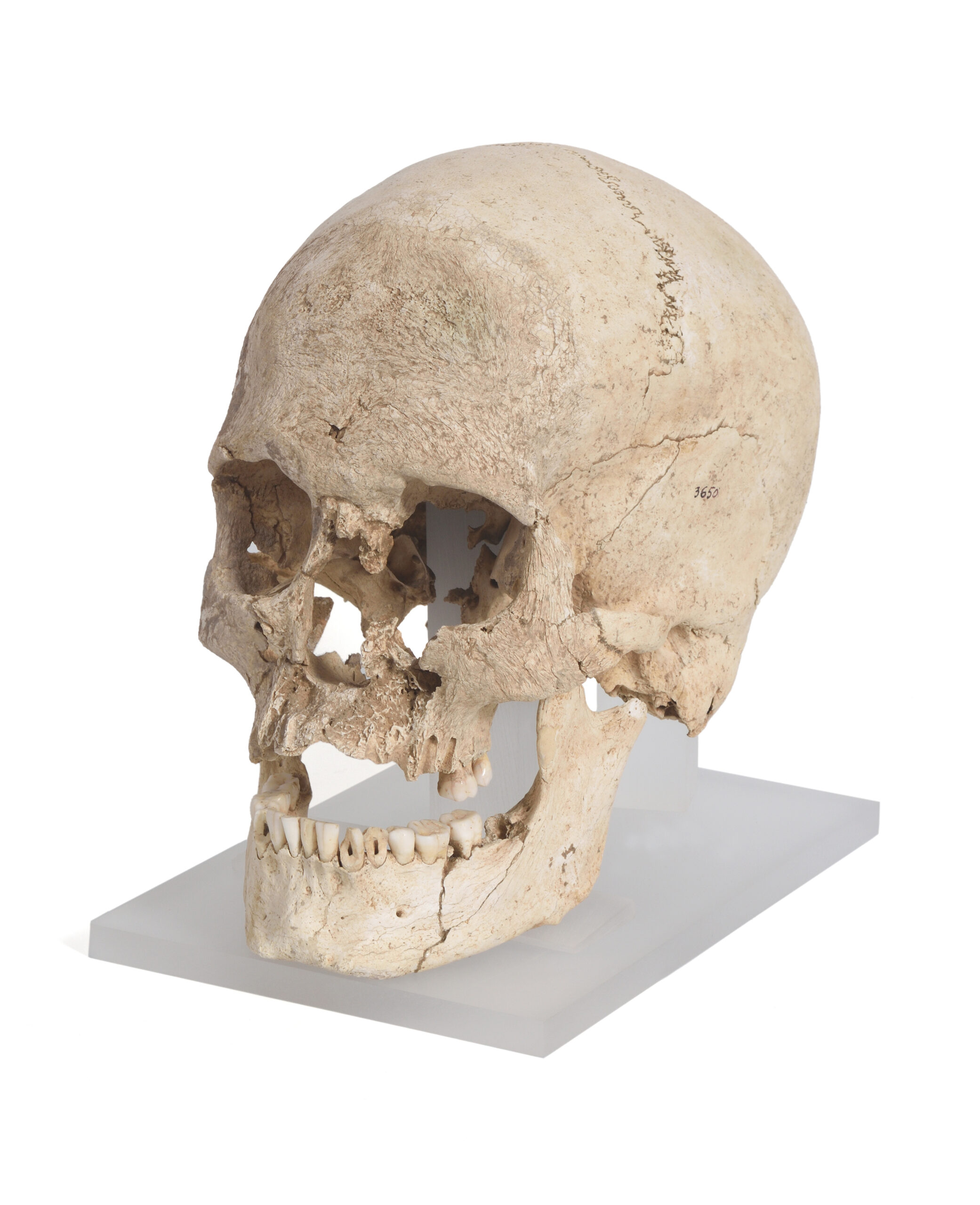
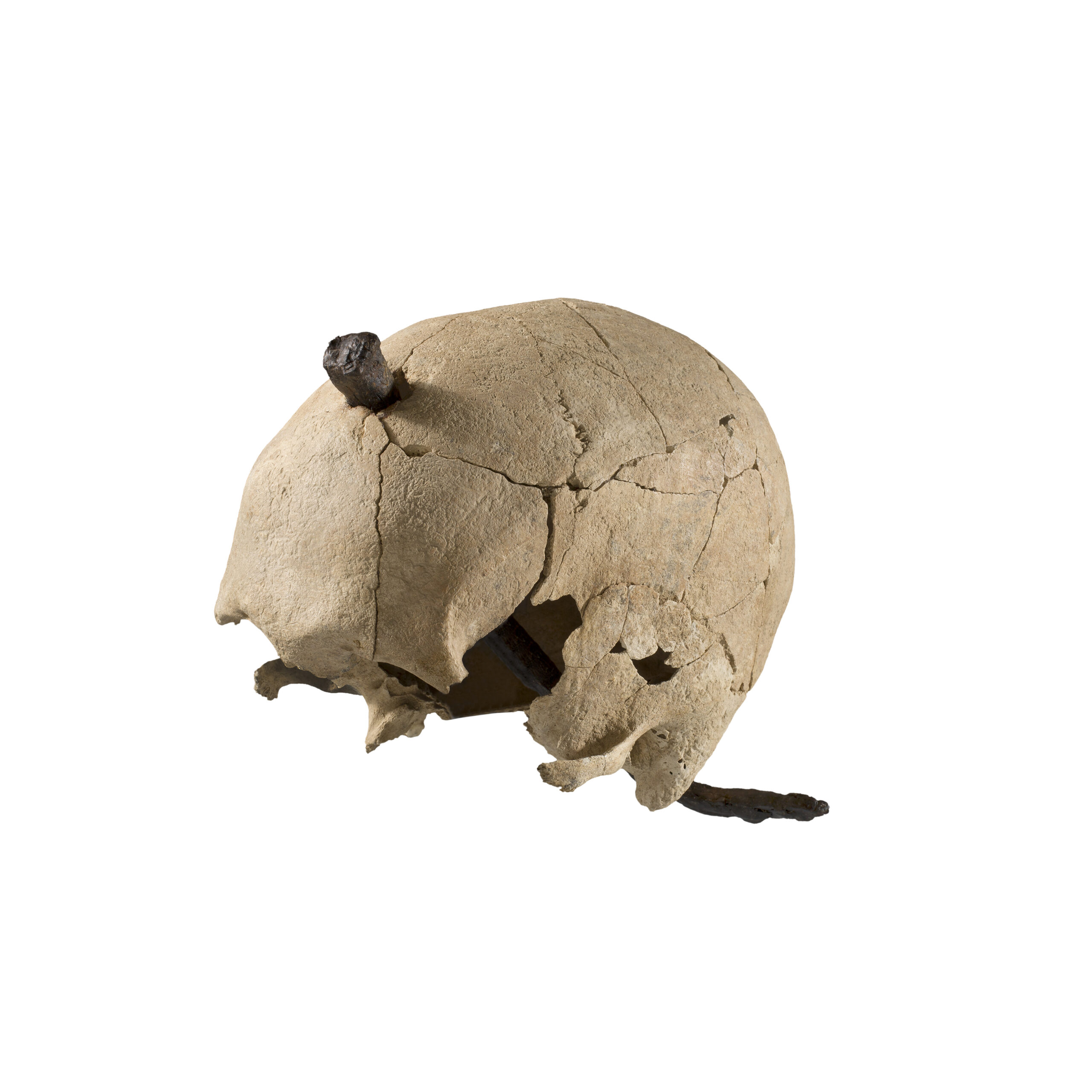
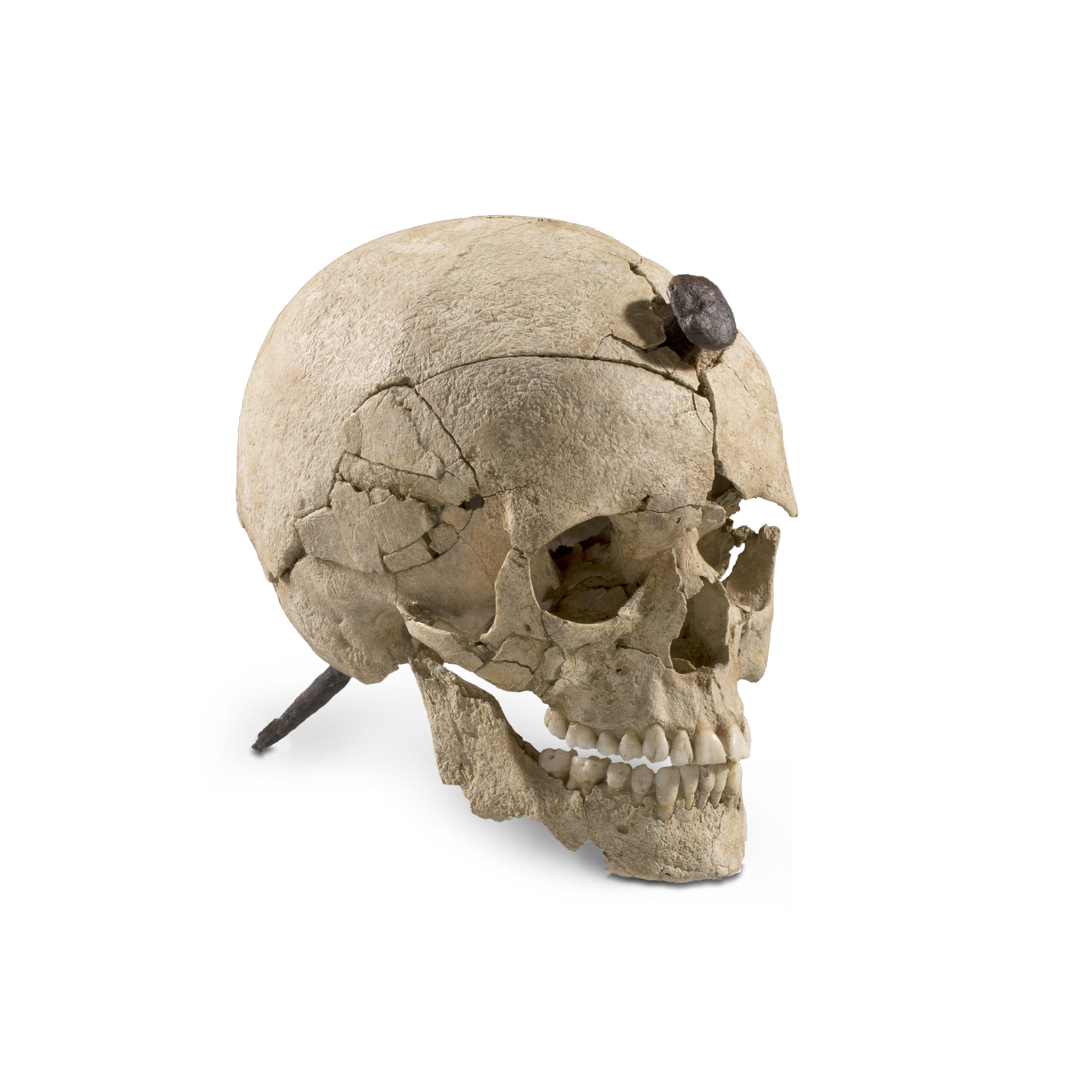
This is the first documented example of a nailed skull in Catalonia. It was found during excavations in the village of Puig Castellar (Santa Coloma de Gramenet, el Barcelonès) in the early twentieth century. It comes from the collection donated by Ferran Sagarra. Skull of an adult female between 30 and 40 years old. It presents the remains of a small bone tumour in the rear. The wear on the few teeth preserved is remarkable. Defleshing marks are visible on the front. The iron nail used to attach it to a wooden structure was more than 20 cm long and before inserting it, the bone was prepared to prevent it fracturing. Some more nailed skulls are known; especially significant are the set from Ullastret, and remains of skulls on the hill of Ca n'Olivé (Cerdanyola, el Vallès Occidental). They are associated with a type of Celtic tradition that, in the Iberian Peninsula, did not exceed the limits of the River Llobregat and was concentrated in the populations of the Indigetas and Laietans. BOSCH GIMPERA, P. 1915-1920, El donatiu de Puig Castellar, per D. Ferran de Sagarra, l'lnstitut d'Estudis Catalans, Annuari de i'lnstitut d'Estudis Catalans VI, 593-597. ROVIRA HORTALÀ, C. 1998, L'exhibició d'armes i cranis enclavats en els hàbitats ibers septentrionals, Cypsela 12, 167-182.